When the smoke clears and the dust settles, the hardest question for a homeowner is: how long until my home is back to normal? That is a valid and urgent concern. You need to know when you can live without disruption, move items back in, and put this crisis behind you. In Boise, the timeline for Fire Damage Restoration in Boise depends on many variables: the extent of damage, smoke infiltration, water used in firefighting, structural issues, permit delays, and more. In this article, we walk you through realistic timelines, influential factors, what each stage involves, and how you can speed things up, all while mentioning how Sawtooth Water Restoration helps make the process smooth.
What does the average fire restoration timeline look like in Boise?
People often ask, “How long does fire damage restoration take in Boise homes?” The answer is: it varies. But generally, for a typical residential fire with moderate damage, expect 2 to 4 weeks for full restoration. For severe damage, multiple rooms, structural rebuilds, heavy smoke—you may be looking at several months before project completion.
From what local firms report, mitigation and cleaning begin almost immediately, followed by drying and repair phases. Projects that include structural reconstruction often stretch into the 4- to 12-week range, depending on permitting, material lead times, and insurance adjustments.
So while your home is not going to be fully restored in a day or two, skilled restoration firms aim to get essential areas functional (kitchen, bathroom, main living) as quickly as possible while finishing noncritical work later.
Which factors affect how long restoration takes?
Many elements combine to determine the project duration. Below are the key ones:
Extent of fire, smoke, and soot damage
If fire burns through structural elements, walls, roofing, or critical systems, repair takes more time. Deep smoke and soot infiltration into drywall, insulation, carpet, and contents also prolong cleaning and deodorizing procedures.
Water damage from firefighting
The water required to extinguish the fire often soaks into walls, subfloors, ceilings, and hidden cavities. Extracting that water and thoroughly drying the structure is time consuming and must be done before reconstruction.
Size of the affected area
Larger damage zones require more labor, equipment, material, and coordination among subcontractors, which scales up project time.
Structural rebuilding and permit processes
If framing, roofing, or load-bearing systems are unsafe, you’ll need rebuilds. That involves permits, inspections, and potentially subcontractor schedules. Delays in approvals or material sourcing affect the timeline.
Content cleaning and pack-outs
Items like furniture, carpets, electronics, and personal belongings may need to be removed, cleaned, deodorized, stored, and then returned. This parallel track requires specialized processes and adds days.
Insurance claim and revision cycles
Insurance adjuster reviews, back-and-forth over scope, change orders, and approvals can stall restoration work if not well managed.
Weather and seasonal constraints
Boise’s climate (hot dry summers, cold winters) can affect drying rates, material availability, and external work scheduling.
Crew size, equipment availability, and logistics
Having enough skilled crews and appropriate drying, cleaning, and reconstruction equipment can make or break schedules.
Because these factors interact, no two projects are identical. But understanding them helps you set expectations and avoid surprises.
Stage by stage: What happens and how long each stage typically takes
Below is a more granular breakdown of each major phase in the restoration project. These are approximate durations for a moderately damaged home; severe projects may scale each stage out considerably.
1. Emergency response and stabilization (Hours to 1 day)
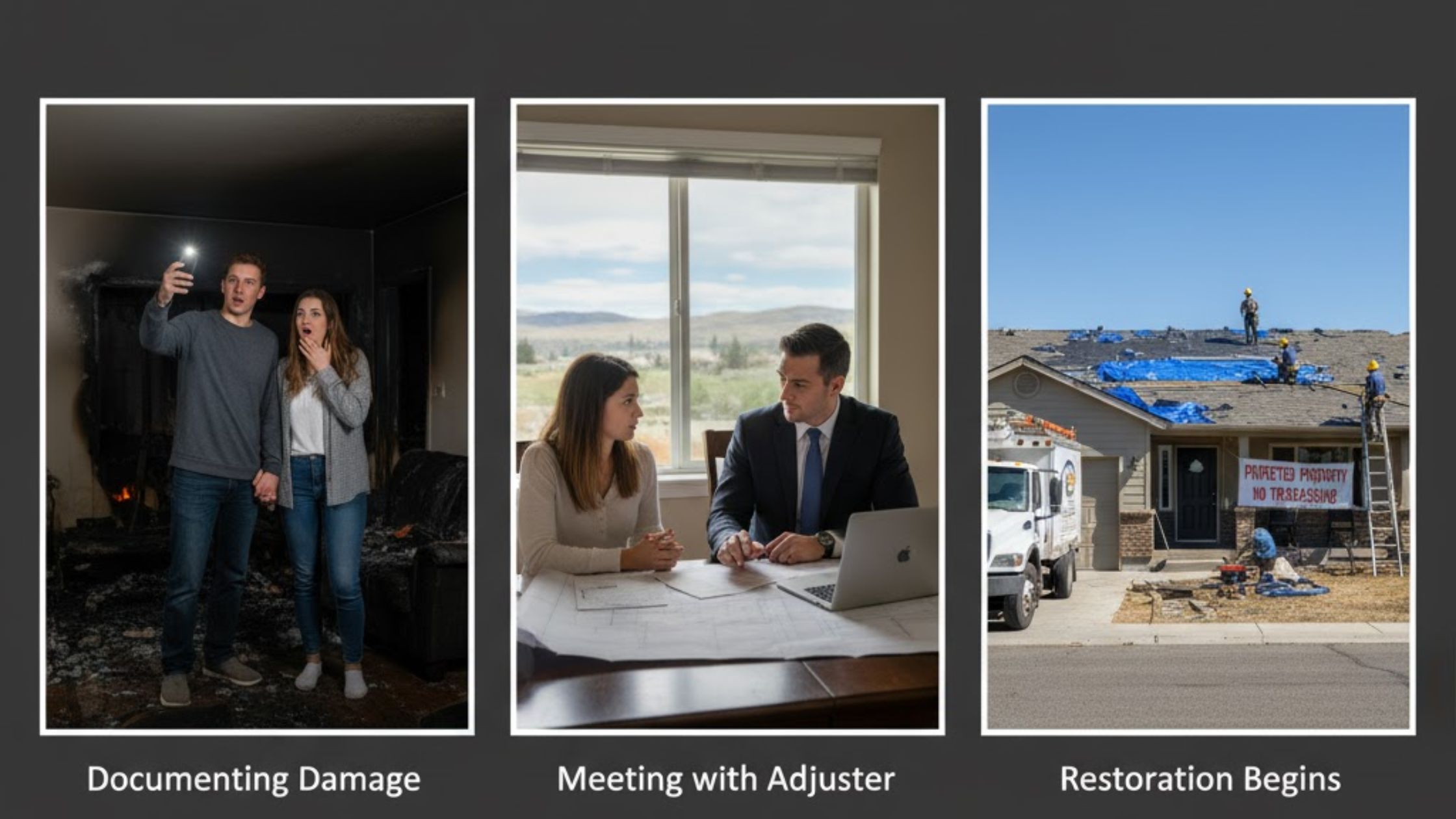
Once your home is deemed safe to enter by authorities, a restoration team should respond immediately. Expect boarding up windows or openings, placing tarps, securing entry points, and initiating containment of unaffected zones. This often happens within the first few hours, ideally on day one.
2. Inspection and damage assessment (Same day or day 1)
Technicians assess structural integrity, smoke and soot spread, water intrusion, and hidden damage. They document everything with photos, thermal imaging, moisture readings, and prepare a detailed scope for repairs. This usually occurs on the same day as response or the first full working day.
3. Water extraction and structural drying (1–4 days)
If water is present, it must be removed and drying begun immediately. Depending on moisture levels and affected materials, this phase can last from one day up to four or five days in extreme cases. The team will monitor moisture levels continuously.
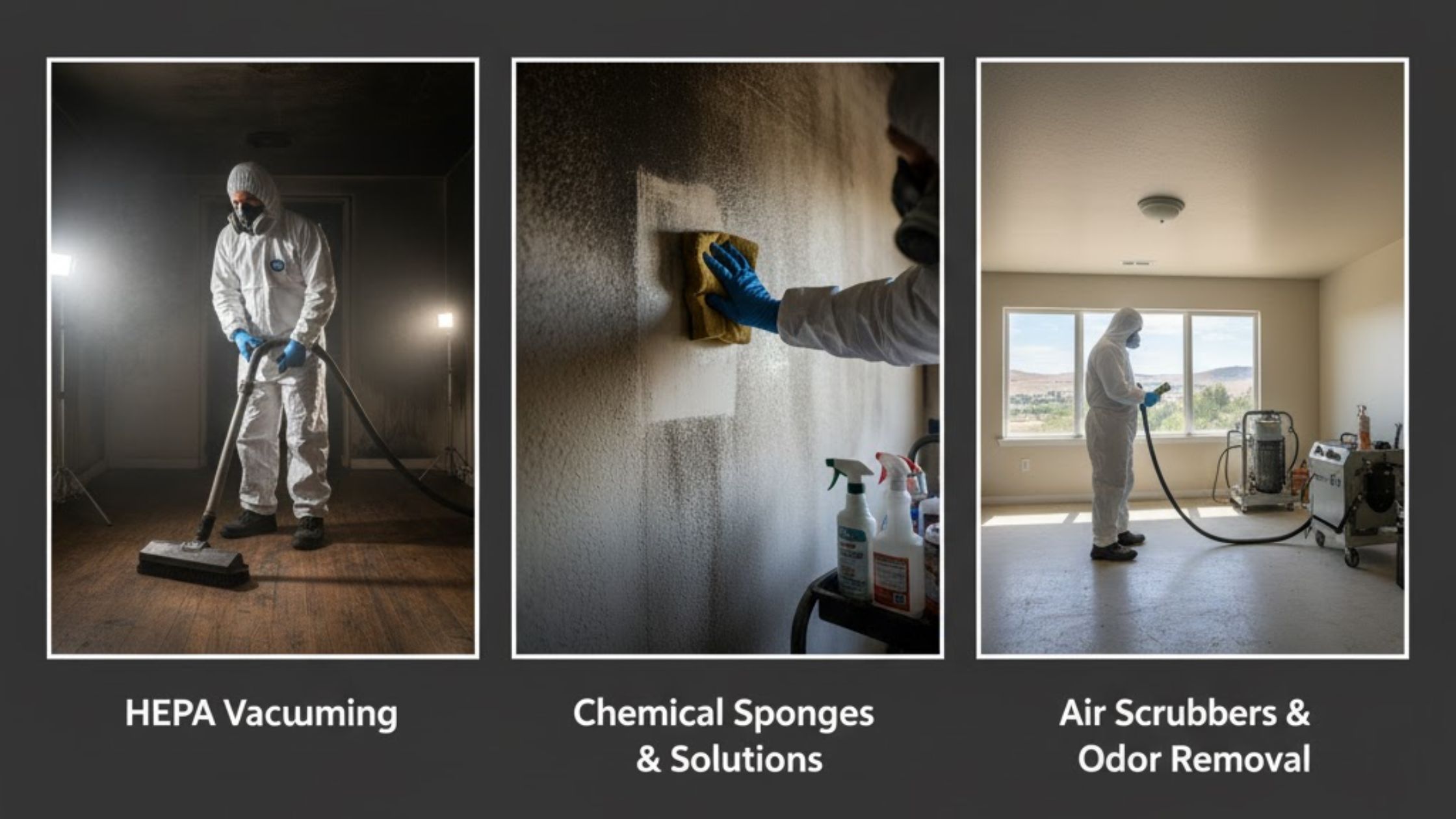
4. Smoke and soot cleanup, odor removal (2–7 days)
Cleaning surfaces, deodorizing, HVAC and duct cleaning, content decontamination, and removing residue may take several days. Deep soot infiltration into porous materials or heavy smoke odor zones may extend this period.
5. Content pack-out, cleaning, and temporary storage (parallel step)
Depending on the number and type of items, this can occur concurrently with other work. Content cleaning, restoration, and inventorying might take 3 to 10 days or more depending on complexity.
6. Reconstruction and repairs (starting day 3–5, lasting to completion)
Once structural drying and cleaning are satisfactory, rebuilding begins. This may include framing, drywall, electrical, plumbing, insulation, flooring, roofing, paint, and finish work. For moderate structural repair, this can take 7 to 14 days. For major work, it might extend to 4 to 8 weeks or more.
7. Final inspection, clearances, and handover (1–2 days)
After all work is done, a final walkthrough with you and any inspector ensures quality, air quality, code compliance, and your satisfaction. The property is then turned back to you in restored condition.
In simpler cases, that entire chain may wrap in 2 to 4 weeks. More complex, structural cases may stretch into 8 to 12 weeks or beyond.
How to optimize and shorten your fire restoration timeline
Though many factors are outside your control, proactive steps can shave days or weeks off your timeline.
- Choose a qualified, local firm (like Sawtooth Water Restoration) with all necessary crews and licenses ready to mobilize.
- Document damage immediately (photos, video) to speed insurance negotiation.
- Approve scopes and change orders promptly.
- Select materials early (flooring, paint, fixtures) so ordering and delivery happen while other work proceeds.
- Maintain open and clear communication with restoration crew and insurance adjusters.
- Allow parallel work streams (e.g. content cleaning while structural drying).
- Hire a company experienced with Boise permits, codes, and subcontractor networks to avoid bureaucratic delays.
Sawtooth Water Restoration uses these best practices, combined with local networks, to expedite your restoration without compromising quality.
Local context: timeline challenges in Boise
A few regional factors make Boise projects unique:
- Permitting delays in Idaho and Boise can add waiting days if restoration requires structural changes.
- Seasonal fluctuations: in winter, drying is slower due to cold air and lower humidity.
- Material supply shortage: certain finishing materials or specialty items may take longer to arrive in smaller markets.
- Insurance adjuster availability: adjusters may be overwhelmed after large disasters, slowing approval responses.
Understanding these local constraints helps you manage expectations and hold service providers accountable.
Common pitfalls that stretch restoration time
- Delaying hiring of a professional restoration firm
- Incomplete scopes or missing hidden damage
- Waiting on insurance approvals before mitigation
- Ordering specialty materials late
- Unclear communication causing rework
- Hiring inexperienced contractors without proper certifications
- Overlooking content cleaning requirements which later become bottlenecks
Avoiding these traps helps your project move faster and smoother.
FAQ: Common questions about fire restoration duration
Q1: Can any restoration project finish in less than a week?
Only in extremely light cases with minimal damage, no structural issues, and no water involvement. Most homes require at least 10–14 days in moderate cases.
Q2: Does insurance waiting time count toward restoration?
Sometimes delays from adjuster review or approval of additional work are out of your control, but a good restoration firm will push to minimize these gaps.
Q3: Will odor removal always take extra time?
Yes, eliminating deep smoke odor from porous materials can take multiple deodorization steps and multiple days.
Q4: Can I move back before full restoration?
Possibly. In many cases, key zones (bedrooms, bathrooms) are prioritized so occupants can safely reoccupy while finishing minor repairs.
Q5: What should I expect in the first 48 hours?
Board-up, water extraction, assessment, start of drying, and initial smoke cleanup. These first two days are critical to preventing secondary damage and speeding the timeline.
Why Sawtooth Water Restoration accelerates your recovery in Boise
At Sawtooth Water Restoration, we understand Boise homes, codes, and climates. Our promise: deliver Fire Damage Restoration in Boise as efficiently as possible without shortcuts. Because we own our crews, manage materials locally, and maintain tight relationships with suppliers and inspectors, we minimize delays. Our integrated teams handle mitigation, content, reconstruction, and insurance coordination under one roof. You deal with one project manager, not multiple contractors.
We also commit to transparent timelines, regular updates, and proactive scheduling. While we can’t always control permitting or external delays, we do control speed of execution, coordination, and responsiveness. That is how we help homes get back to life faster.
If your home suffers from fire damage, reach us instantly through our Contact us page, and we’ll begin planning your fastest possible recovery.